
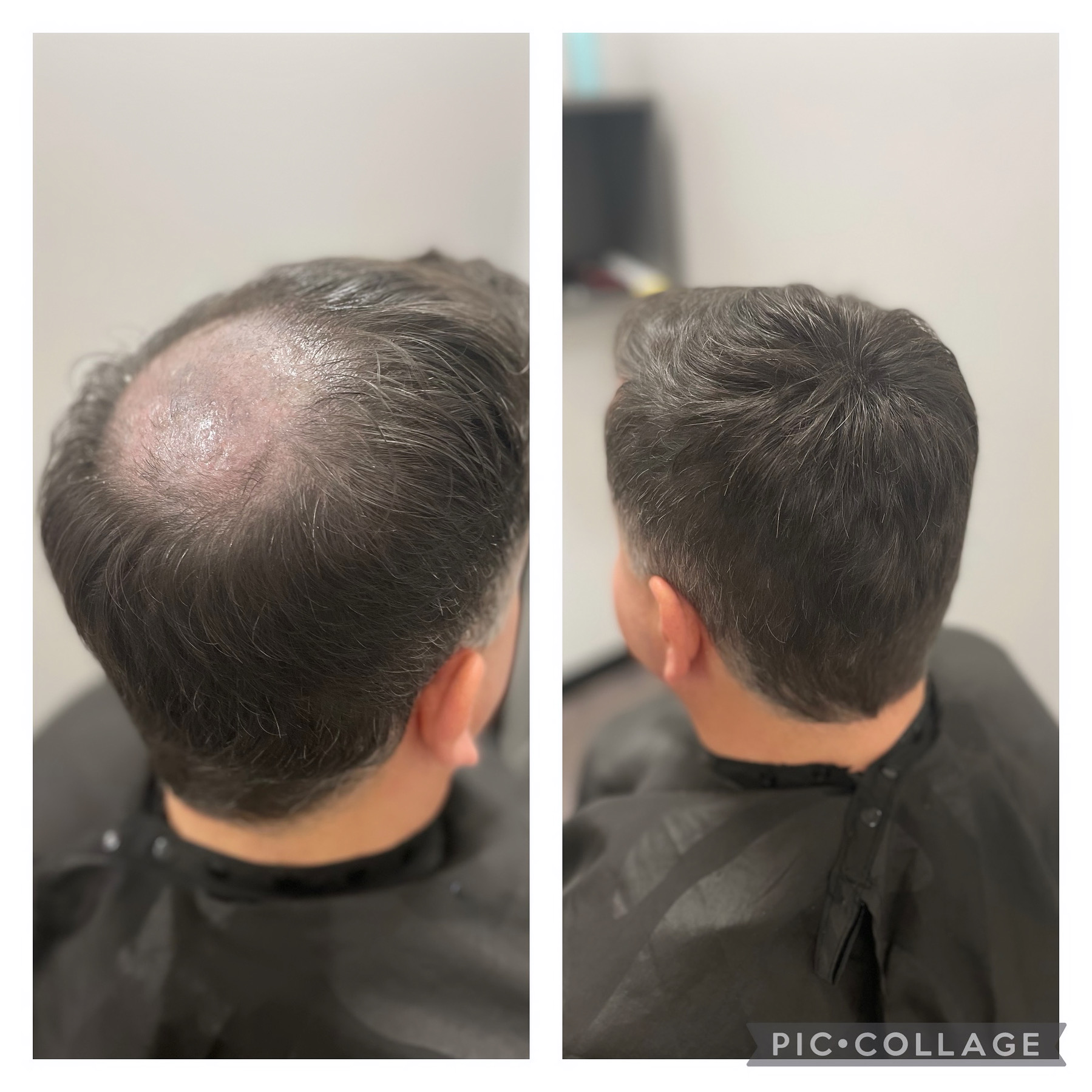
Hair System for a Thinning Crown: What Actually Works
A thinning crown is one of the easier patterns of hair loss to address with a hair unit. Not because it is simple — but because you have something to work with. The sides and front are usually intact. The crown is where the coverage problem sits. A well-fitted partial hair system, placed correctly, is often undetectable.
Here is what to know before choosing one.
Why the Crown Is a Different Problem
Most hair system guides focus on full coverage or hairline reconstruction. Crown thinning is a different challenge. The loss sits at the back of your head in a pattern that tends to widen over time. You probably still have hair around it. That’s the complication.
The hair unit has to blend into existing hair on all sides. There is no clean edge to hide behind. The base material, the density, and the way the specialist positions the unit all matter more here than they do for a full system.
Get one of those three things wrong and it reads as a patch. Get them right and no one can tell where your hair ends and the unit begins.
What Base Material Works Best for Crown Coverage
There are three base types used for crown placement. Each has a different trade-off between durability, detectability, and maintenance.
| Base Type | Crown Coverage | Detectable at Edge | Best For |
|---|---|---|---|
| Skin / Poly | Excellent | No — scalp-like appearance | Full crown coverage, close-shaved sides |
| Lace | Good | Minimal if well matched | Blending into finer existing hair at edges |
| Mono | Good | Low | Men who want durability with a natural result |
For most men with a thinning crown, a skin or poly base is the most practical starting point. It sits flat against the scalp, creates a natural-looking part in any direction, and holds its bond for 4 to 8 weeks between maintenance visits.
If your thinning sits in the middle of finer, lighter surrounding hair, a lace base might blend more cleanly at the edges. Your specialist will assess this during the consultation. If they recommend lace for a crown position, ask to see examples of how they have handled that edge transition on clients with a similar hair type.
Getting the Density Right
This is where most self-sourced hair units go wrong. Men assume more hair looks more natural. It doesn’t. The crown area on a man in his 30s or 40s already has natural density variation. Heavy, uniform density reads as a wig.
Ask for a density that sits close to your remaining hair on the sides. Your specialist can assess this at the consultation. The goal is that the crown blends into what’s already there, not that it sits on top of it with a noticeably different texture and weight.
Blending With the Hair You Have
This is the part that separates a good specialist from an average one.
The edges of a crown hair system need to be feathered into your existing hair. That means tapering the density at the perimeter of the unit, matching your natural curl pattern or wave, and checking the result in natural light from multiple angles before you leave the chair.
A specialist who rushes the blend is the main reason crown units get noticed. Aceman Weave Units connects men with vetted specialists across 9+ US cities — over 13,000 men have used the platform. Every specialist listed has gone through a review process before being accepted onto the directory.
How Long Will the Hair Unit Last
A crown hair unit installed on a poly or skin base will hold its bond for 4 to 8 weeks. The unit itself typically lasts 4 to 8 months, depending on the quality of hair and how consistently it is maintained.
Worth knowing: sweat breaks down the adhesive faster than most men expect. If you exercise regularly or work somewhere warm, your specialist may recommend a stronger hold tape for the crown position. That is worth raising at the consultation before agreeing to a maintenance schedule.
What to Ask Your Specialist Before Booking
- Can I see before and after photos of crown coverage on clients with a similar pattern to mine?
- What density do you recommend for my hair type?
- Which base material will give me the cleanest blend at the edges?
- How long should I expect the bond to hold if I exercise regularly?
- What products should I use to protect the adhesion between maintenance visits?
These are not aggressive questions. They are the minimum a good specialist will expect you to ask. If you are being moved past them quickly, that is worth paying attention to.
Where to Start
If you are still building a picture of how this process works, the men’s hair system buyer’s guide covers everything from first consultation through to ongoing maintenance. Worth reading before you book anything.
When you are ready to look at specialists in your area, the directory is at acemanweaveunits.com/find-specialists. No deposit required to browse. Every specialist listed has been reviewed before being added to the platform.
Once you have a specialist and a service date confirmed, the maintenance guide will walk you through what to expect in terms of upkeep schedule and ongoing cost.